


Skills in Metabyte SP are defined as the smallest measurable units of capability, clear and specific abilities that reflect real-world expertise and cannot be broken down further. Common industry synonyms are mapped to a standard skill. New skills are continuously added to the library as they emerge.

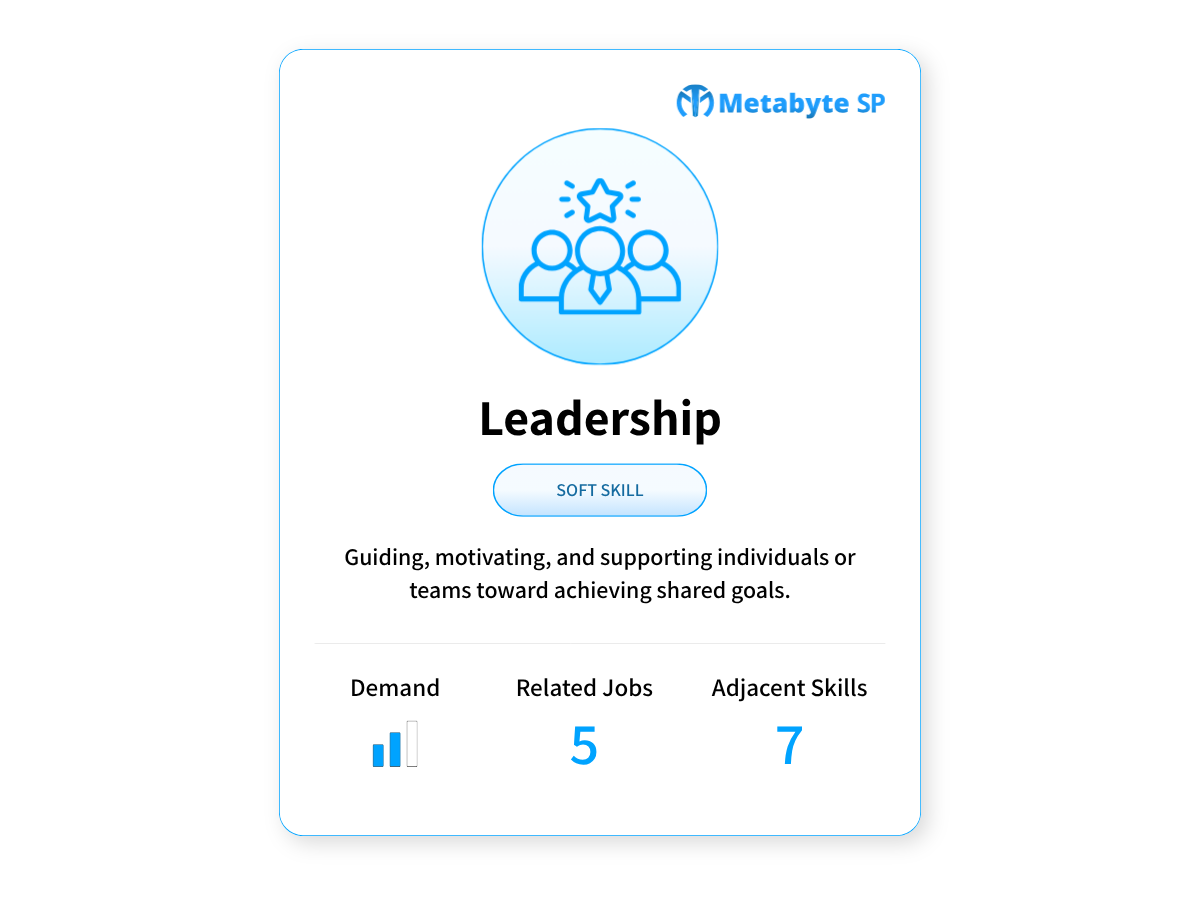
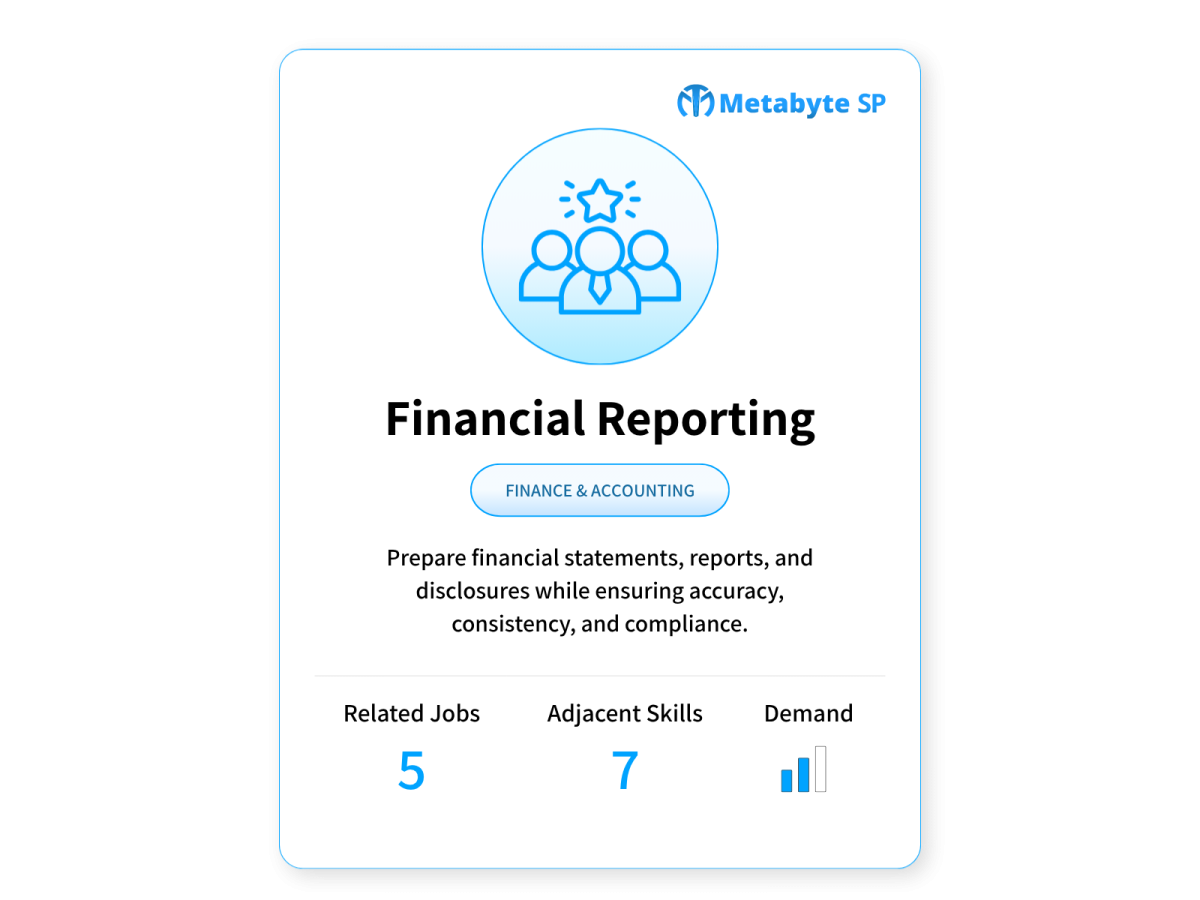

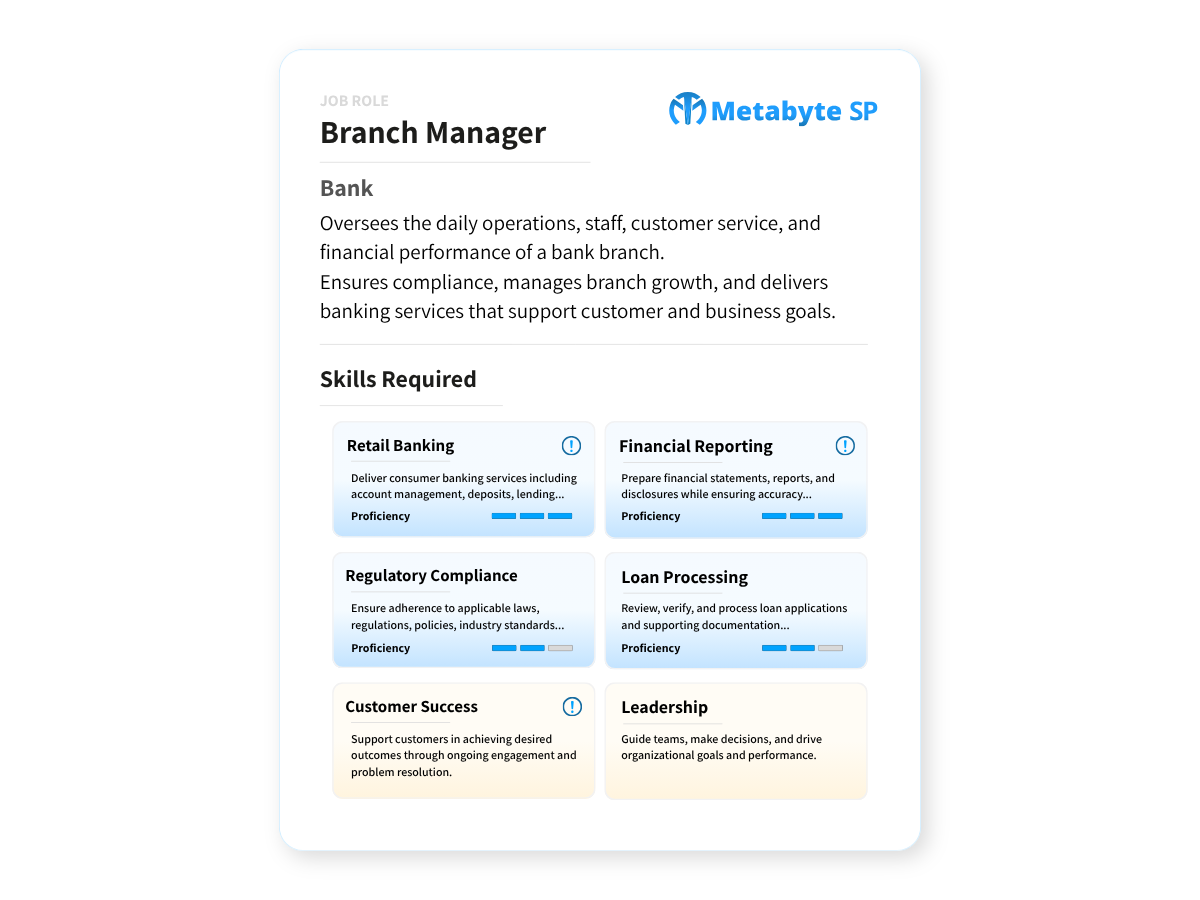
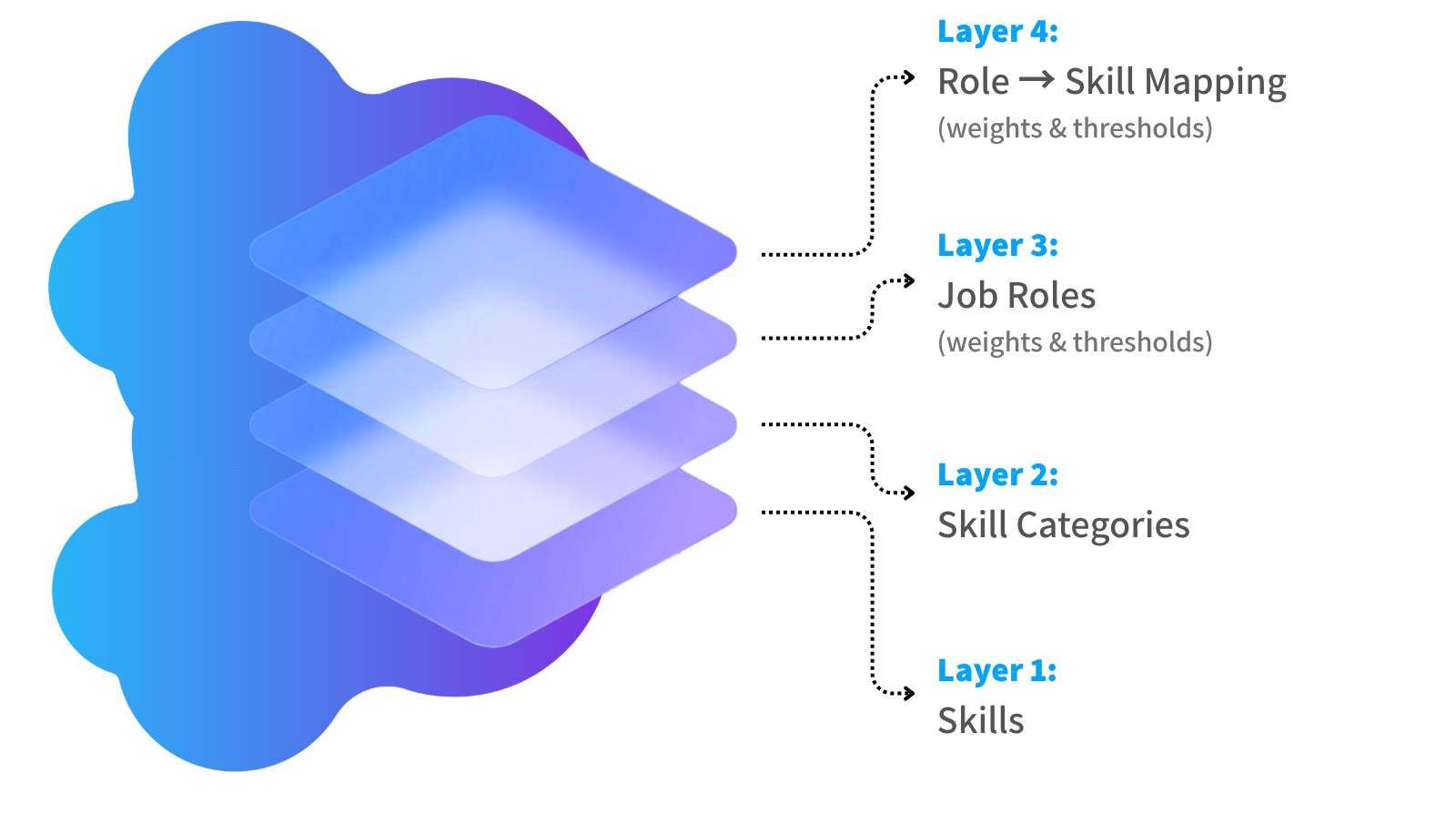
The Skills Intelligence Layer operates on top of a four-layer structured architecture of granular skills, skill categories, standardized roles, and role–skill mappings. Together, this enables consistent, accurate, and explainable matching and decisions.
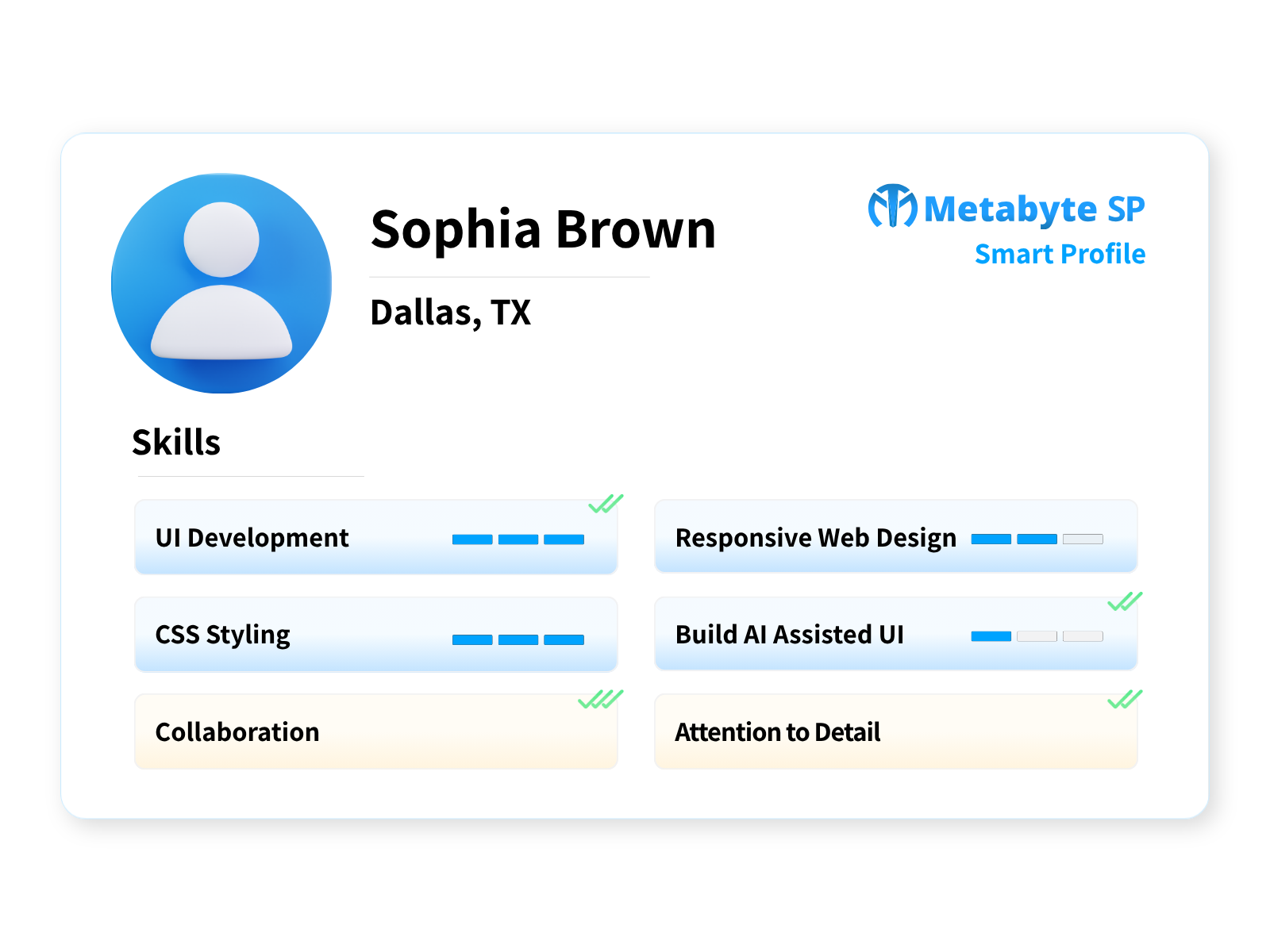
Candidates indicate skill proficiency through self-assessments, complemented by AI-based estimates from profile data and observed patterns. Peer and manager validations strengthen these signals over time, creating a consistent and credible measure for more accurate matching and decisions.
Metabyte SP provides visibility into profiles, skills, validations, and matching logic. Candidates can understand and strengthen profiles over time with new skills and validations. Employers can see how candidates are ranked and how skills, proficiency, validations, and preferences contribute to each fit score.

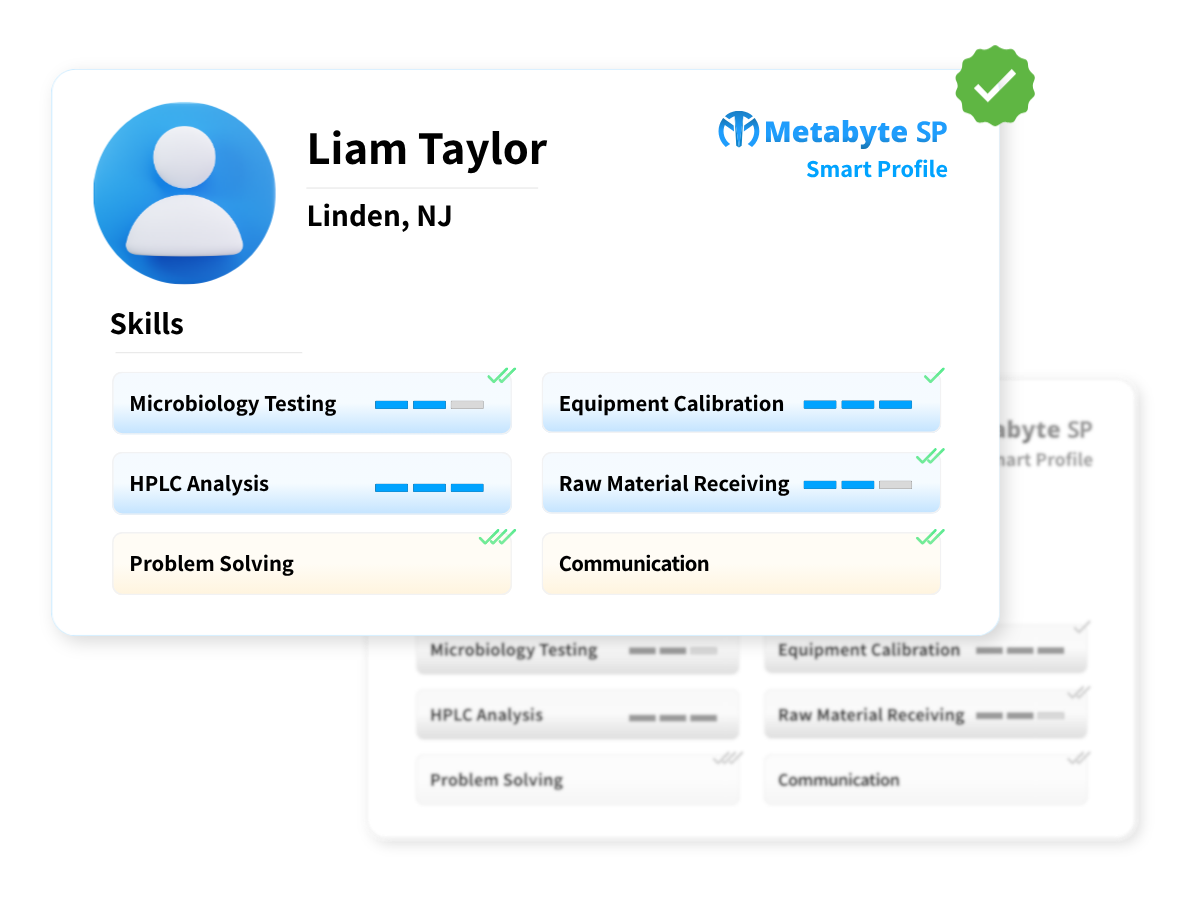

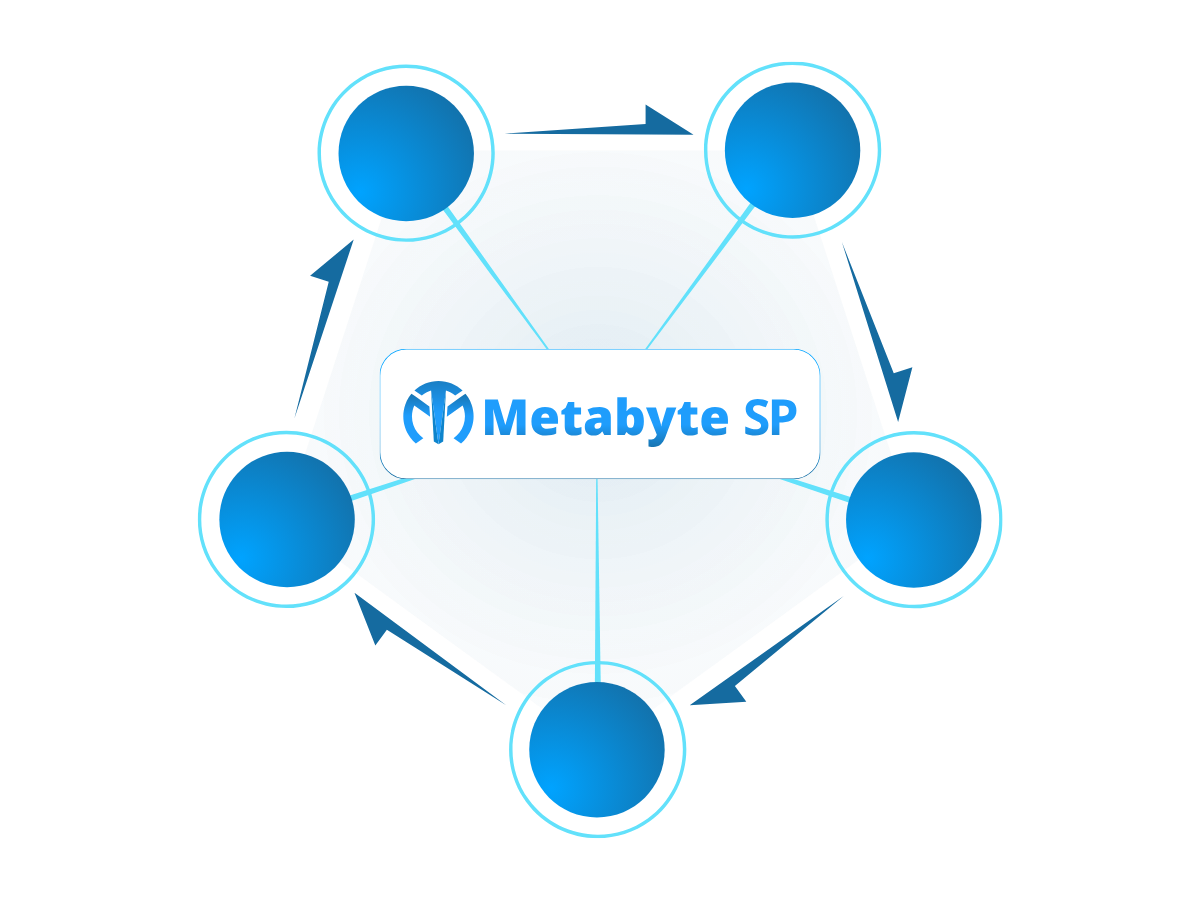
Job requisitions are normalized against structured roles from the library while preserving specific variations in skills, priorities, and context. AI continuously learns and evolves the system. When a skill does not map to an existing atomic skill, a new one is defined and incorporated into the model.
Employers get decision-ready shortlists from the Skills Intelligence Layer and structured architecture. Candidates are matched to roles using normalized skills, proficiency, and preferences.